Why Your Home Didn’t Sell and What Needs to Change Before You Relist
When a home expires from the market, it can feel frustrating, disappointing, and confusing. You may have prepared the property, agreed to showings, adjusted your schedule, kept the home clean, and waited for the right offer—only to reach the end of the listing period without a successful sale.
That does not automatically mean there is something wrong with your home.
In many cases, an expired listing is the result of a strategy that did not create enough buyer attention, urgency, confidence, or competition. The home may have been listed, but it was not positioned strongly enough to stand out against every other property buyers were considering.
The important thing to understand is that an expired listing gives us valuable information.
We can review how buyers responded, how the home compared to competing listings, what feedback was received, how the property was marketed, and whether the original pricing strategy matched the market. That information can help us build a stronger relaunch instead of repeating the same plan and hoping for a different result.
Your home may not need a completely different goal. It may simply need a better strategy.
An Expired Listing Is Information, Not Failure
When a listing expires, the market has already provided feedback. Sometimes that feedback is obvious, such as limited showings or repeated comments about price. Other times it is less direct.
For example, your home may have received plenty of online views but very few showing requests. That can indicate the presentation did not create enough interest to motivate buyers to visit in person.
You may have received a reasonable number of showings but no offers. That can suggest a concern with price, condition, layout, updates, location, or how the property compared to other available homes.
You may have received offers, but they were significantly lower than expected. That can mean buyers saw value in the property but believed the asking price exceeded the home’s current market position.
The goal is not to blame the home, the seller, the previous agent, or the market. The goal is to understand what happened and use that information to create a more effective relaunch.
Before placing an expired listing back on the market, four questions need to be answered:
Was the home priced correctly against current competition?
Did the listing create a strong first impression?
Did the property receive enough qualified exposure?
Was buyer and agent feedback collected, pursued, and used?
Those questions form the foundation of a successful second attempt.
Seller Guide Book
Reason One: The Home Was Not Positioned Correctly on Price
Pricing is one of the most important parts of selling a home, but it is also one of the most misunderstood.
A home’s price is not determined solely by what the seller needs, what was invested in renovations, what a neighbor received several years ago, or what an online estimate suggests. Buyers determine value by comparing the home to other available choices.
That means your home is competing against active listings, recently sold properties, pending homes, new construction, updated homes, and properties with different incentives.
Even when two homes appear similar on paper, buyers may value them differently based on condition, layout, location, lot, school assignment, updates, presentation, and overall emotional appeal.
A property can be priced close to its estimated value and still be positioned poorly.
For example, imagine your home is listed at $500,000, and several competing homes are listed between $485,000 and $510,000. If the lower-priced homes have updated kitchens, stronger photography, better staging, or more desirable lots, buyers may view your property as less competitive—even if the price seems reasonable on its own.
Pricing is not only about avoiding overpricing. It is about creating the strongest possible position within the market.
A strategic price should accomplish several things:
Capture the attention of qualified buyers.
Encourage showing activity.
Create a sense of urgency.
Support the home’s perceived value.
Increase the possibility of stronger offers.
Protect the seller’s net proceeds.
Sometimes sellers worry that pricing competitively means giving the home away. In reality, the opposite can happen. A home that is positioned well may attract more buyers, create competition, and lead to stronger negotiating power.
A home that sits at an overly ambitious price may lose momentum, accumulate days on market, require repeated reductions, and eventually sell for less than it might have if it had been positioned correctly from the beginning.
Before relaunching, the pricing strategy should be rebuilt using current information—not the market conditions that existed when the home was first listed.
Reason Two: The Listing Did Not Create a Strong First Impression
Most buyers first experience a property through a screen.
Before they walk through the front door, they have already formed an opinion based on the first photograph, the quality of the images, the listing description, the order of the photos, the floor plan, the property details, and the overall presentation.
That means the first showing often happens online.
If the listing does not immediately capture attention, buyers may never schedule an in-person visit.
Professional presentation is not about making a home appear unrealistic. It is about clearly communicating the property’s value and helping buyers understand why it deserves their attention.
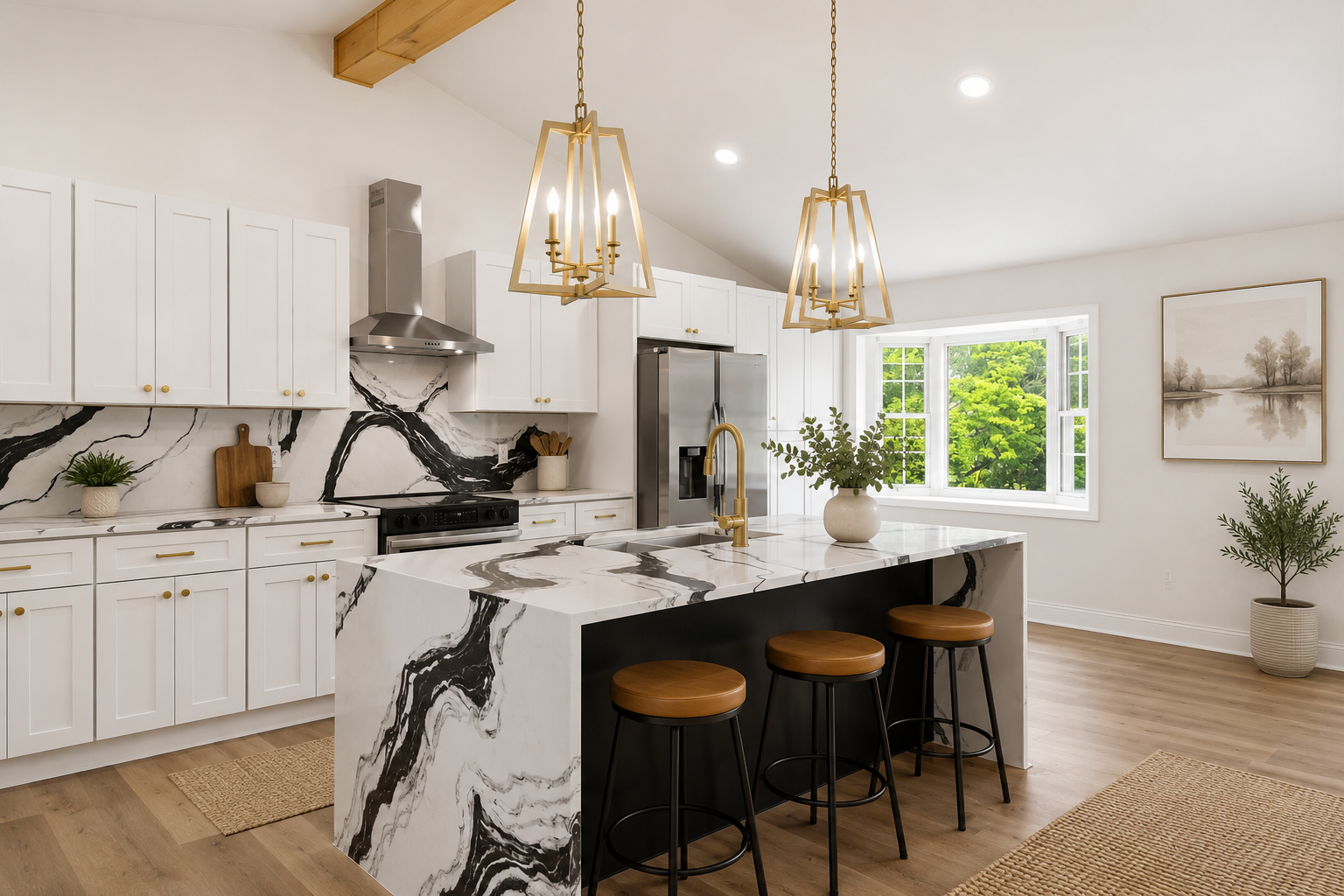
Bright, polished listing photos help buyers stop, click, and schedule a showing.
A strong visual package may include:
Professional photography.
Drone photography when appropriate.
Video marketing.
Virtual twilight images.
Virtual staging for vacant or difficult spaces.
Accurate measurements.
A detailed floor plan.
A property website.
Strong listing copy.
Carefully organized photographs.
Clear information about upgrades and features.
The order of the photos matters as well. The first image should create enough interest for the buyer to continue. The next several images should tell a clear visual story and highlight the strongest features of the home.
Poor-quality photographs can make rooms appear dark, small, cluttered, or dated. Missing photographs can create uncertainty. Too many repetitive images can cause buyers to lose interest.
A strong listing description should also do more than repeat basic facts.
Buyers can already see the number of bedrooms, bathrooms, and square footage. The description should help them understand what makes the home special.
Does the kitchen create a natural gathering space? Is the backyard private? Does the floor plan support entertaining, working from home, or multigenerational living? Are there meaningful updates that reduce future maintenance?
Effective marketing connects features to the buyer’s lifestyle.
Buyers often make an emotional decision first and then justify that decision with logic. The marketing should help them picture themselves living in the home—not simply provide a list of characteristics.
Reason Three: The Property Was Listed but Not Fully Marketed

A complete marketing launch combines presentation, exposure, and strategy.
Being entered into the MLS is not the same as receiving a complete marketing strategy.
The MLS is essential, but it is only one part of the process.
A strong launch should create multiple opportunities for buyers and agents to discover the home. The more qualified attention the property receives, the greater the opportunity to generate showings, offers, and competition.
A complete marketing plan may include:
MLS exposure.
Major home-search websites.
Professional photography.
Video marketing.
Social media content.
Targeted digital advertising.
Email marketing.
Direct outreach to buyer agents.
Promotion through local groups.
Open-house marketing.
Signage and directional signs.
Printed property materials.
A custom property website.
Exposure through professional real estate networks.
Follow-up with buyers who previously showed interest.
The goal is not simply to generate random views. The goal is to place the home in front of people who are capable of buying it and likely to be interested in the location, price point, features, and lifestyle.
A listing can receive thousands of online impressions without producing meaningful activity. Exposure needs to be targeted, consistent, and connected to a clear call to action.
For example, social media marketing should do more than post a few photographs and wait. The content should highlight the property’s most compelling features, create a reason to stop scrolling, and direct interested buyers toward the listing or a showing request.
Email marketing should be used strategically to reach active buyers, past clients, local agents, and relevant contacts.
Agent outreach is especially important because buyer agents often know which clients are actively searching, what those clients have already rejected, and what might motivate them to view a new property.
A well-marketed listing does not quietly appear online. It launches with purpose.
Reason Four: The Home Did Not Generate Enough Buyer Urgency
A buyer can like a home and still decide not to act.
The difference between interest and action is often urgency.
Urgency can be created through strong pricing, polished presentation, limited competition, strategic timing, clear communication, and visible buyer activity.
When buyers believe a home is overpriced, widely available, or likely to sit on the market, they may delay. They may wait for a price reduction, continue shopping, or submit a lower offer.
When buyers believe a home is well-positioned and likely to attract competition, they are more likely to schedule a showing quickly and make a serious decision.
This does not mean using pressure or misleading tactics. It means creating a listing that appears valuable, competitive, and worth acting on.
The first several days of a relaunch are especially important because new listings receive the most attention from active buyers and agents.
That initial window should be used strategically.
The photography should be complete. The listing details should be accurate. The price should be intentional. The showing process should be easy. The marketing should be coordinated. Agent outreach should begin immediately.
A weak launch wastes the moment when buyer attention is naturally strongest.
Reason Five: Showing Feedback Was Not Pursued or Used
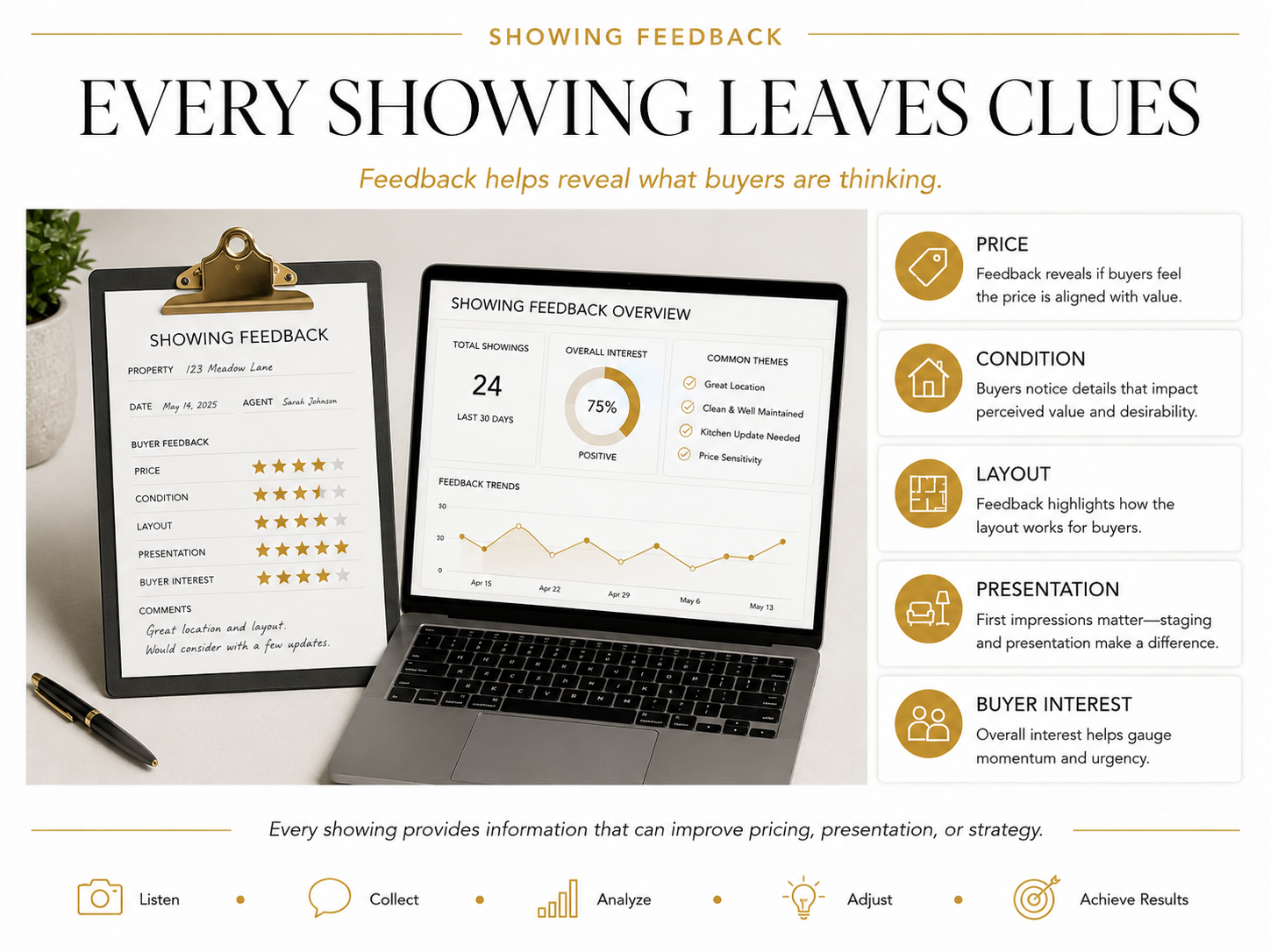
Every showing provides information that can help improve pricing, presentation, and overall strategy.
Every showing provides valuable information.
The absence of an offer does not mean the showing was meaningless. The buyer may have liked several features but had one concern that prevented them from moving forward.
The buyer agent may have noticed how the property compared to another home. They may know whether the buyer viewed the home as overpriced, dated, too small, poorly staged, or less competitive than another option.
That information can help improve the strategy.
However, many sellers receive limited feedback because automated surveys are ignored, responses are vague, or no one follows up directly.
A strong follow-up process should attempt to answer questions such as:
What did the buyer like most?
What concerned them?
How did the home compare to others they viewed?
Did they believe the price matched the condition?
Are they considering an offer?
Is there a specific issue preventing them from moving forward?
Would a change in price or terms affect their interest?
The purpose of follow-up is not to pressure anyone. It is to understand the buyer’s perspective and identify opportunities.
When several buyers mention the same issue, that is important.
One comment may be a personal preference. Repeated comments can signal a market objection.
If multiple buyers believe the home is priced too high, the seller needs to know. If buyers consistently mention a repair, odor, cosmetic issue, or confusing room, that information may guide the next decision.
The market communicates through patterns. A strong listing strategy pays attention.
Reason Six: The Strategy Did Not Adjust Quickly Enough
Real estate marketing requires monitoring and adjustment.
A listing should not be placed online and left unchanged for weeks while the seller waits.
The response should be measured.
Important indicators include:
Online views.
Saves or favorites.
Showing requests.
Showing feedback.
Repeat visits.
Agent questions.
Open-house attendance.
Offer activity.
Competing listings.
New pending sales.
Price reductions nearby.
Each of these can help determine how the market is responding.
For example, strong online views with few showings may indicate a problem with price or presentation.
A good number of showings with no offers may indicate that buyers see the home as less competitive once they visit.
Very limited activity may suggest the home is not reaching the right audience or is positioned outside the range buyers believe is reasonable.
The strategy should not change emotionally after one quiet day, but it should not ignore clear evidence either.
The best time to address a problem is before the listing loses momentum.
What Should Change Before the Home Is Relisted?
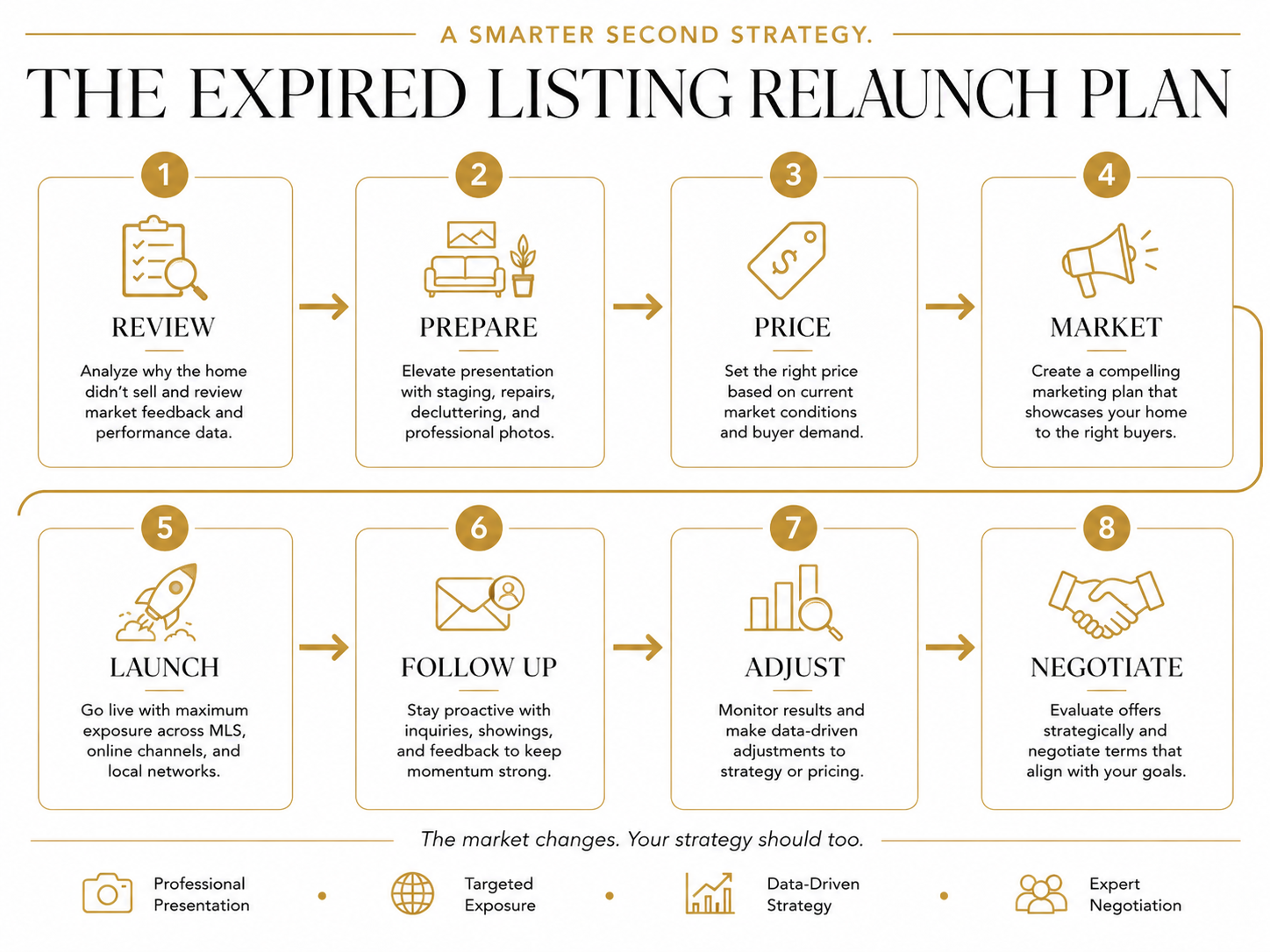
A successful relaunch requires a complete plan—not simply putting the home back on the market.
A successful relaunch should feel different from the first listing.
The property should not simply return to the market with the same photos, same price, same description, and same plan.
A relaunch should include a complete review of the previous listing.
Review the Original Performance
The first step is examining the prior results.
How many showings occurred? How many online views were recorded? Were there saves, inquiries, open-house visitors, or offers? What feedback was provided? Did activity change after a price reduction?
This information helps identify the strongest and weakest parts of the original strategy.
Reevaluate the Price
The market may have changed since the home was first listed.
New properties may have entered the market. Competing homes may have sold, reduced their prices, or gone under contract. Buyer demand and interest rates may have shifted.
The relaunch price should be based on current competition and current buyer behavior.
Improve the Presentation
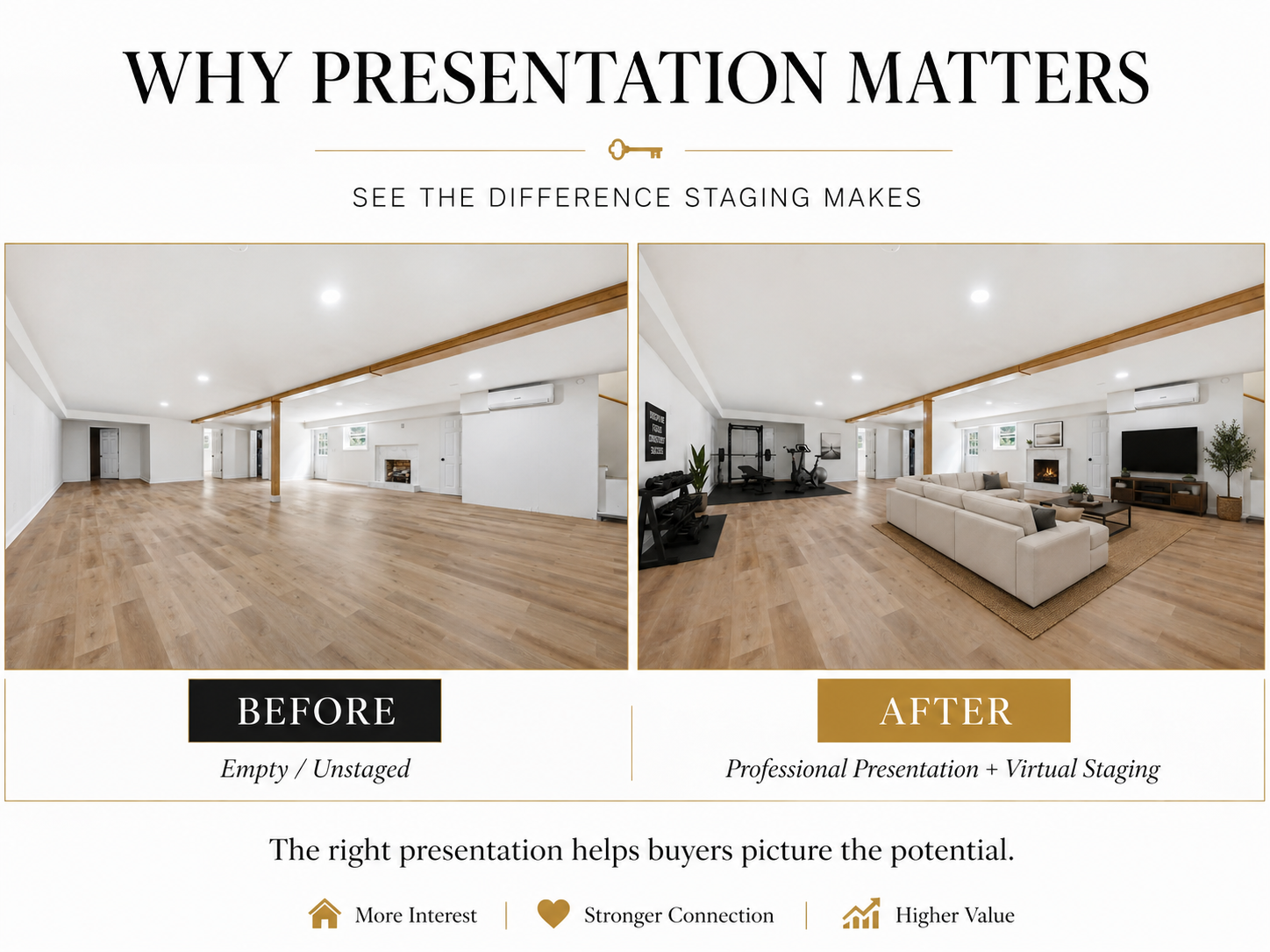
The home may benefit from staging adjustments, repairs, decluttering, fresh paint, landscaping, lighting changes, or improved photography.
Not every home needs major renovations.
Sometimes a few focused changes can significantly improve how buyers perceive the property.
Rebuild the Marketing
The relaunch should have a complete visual and promotional plan.
Professional photography, floor plans, video, digital marketing, agent outreach, email campaigns, and open-house promotion should work together.
Make Showing Access Easy
Buyers often view several homes within a limited period. Difficult showing restrictions can reduce opportunities.
The home should be accessible whenever reasonably possible while still respecting the seller’s needs.
Create a Follow-Up Process
Every inquiry and showing should receive attention.
Feedback should be pursued, patterns should be communicated, and interested parties should not be allowed to disappear without reasonable follow-up.
Why Professional Marketing Matters
Professional marketing affects how buyers perceive value.
A home that looks polished, well-maintained, and thoughtfully presented may feel more desirable—even when its basic features are similar to another property.
That stronger perception can lead to:
More online attention.
More showing requests.
Greater buyer confidence.
More serious interest.
Increased competition.
Better negotiating leverage.
Professional photography is one of the most important components.
The images should be bright, accurate, well-composed, and focused on the home’s best features.
Drone photography can help buyers understand the property, lot, surrounding area, proximity to amenities, or unique setting.
Video can create a stronger emotional connection and show how the rooms flow together.
Floor plans help buyers understand the layout and remember the property after a showing.
Accurate measurements reduce confusion and provide useful information.
Virtual staging can help buyers visualize vacant rooms, while virtual twilight images can create warmth and curb appeal.
A custom property website can provide one place for the complete story, photographs, video, property details, and showing information.
These tools are not valuable simply because they look impressive. They are valuable when they help buyers understand and appreciate the home.
Why Online Exposure Alone Is Not Enough
Most buyers search online, but simply appearing on major websites is not a complete strategy.
Nearly every MLS listing is distributed to major real estate platforms. That exposure is important, but it does not automatically make one home stand out.
The listing still needs:
Strong photography.
Accurate information.
A compelling first image.
Competitive pricing.
Clear feature descriptions.
Strategic promotion.
Direct outreach.
Consistent follow-up.
Online exposure works best when the presentation is strong enough to convert attention into action.
A buyer may scroll past dozens of properties within minutes. The listing must provide a reason to stop.
The Importance of Agent Outreach
Buyer agents can be one of the most valuable sources of qualified interest.
They know which buyers are active, what those buyers have seen, what they rejected, and what features matter most.
Direct outreach can help introduce the property to agents who may already have a suitable client.
This may include emails, personal messages, calls, agent previews, office exposure, professional networks, and follow-up after showings.
A listing should not depend entirely on buyers finding it on their own.
Proactive marketing means bringing the home to the people most likely to have an interested buyer.
The First 14 Days of the Relaunch
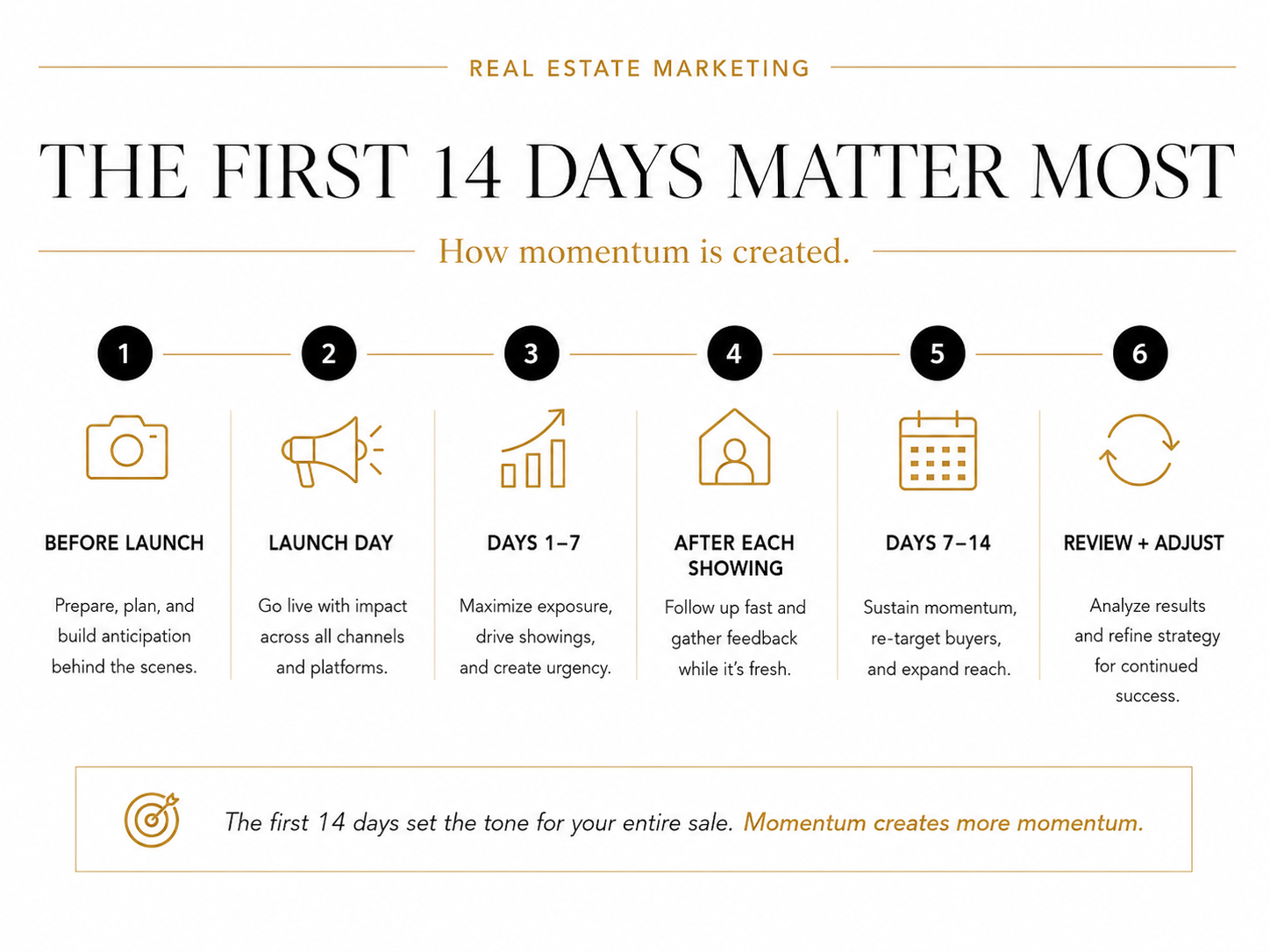
The first 14 days set the tone for the entire relaunch and should be managed strategically.
The first two weeks are critical.
This is when the listing is fresh, active buyers receive alerts, agents notice the new opportunity, and the property has the strongest chance to generate momentum.
Before launch, the home should be prepared, photographed, measured, priced, and fully entered into the MLS.
During launch week, the listing should be promoted across all appropriate channels.
Buyer agents should be contacted. Social media content should be published. Email marketing should begin. Open-house promotion should be coordinated when appropriate.
After each showing, feedback should be pursued.
During days seven through fourteen, the results should be reviewed.
Are buyers clicking? Are they saving the home? Are they scheduling showings? What are agents saying? Are buyers returning? Are offers being discussed?
The market’s response should guide the next steps.
The goal is not to panic or make unnecessary changes. The goal is to stay informed and act before valuable momentum is lost.
How More Exposure Can Lead to Better Results
A successful marketing strategy creates a chain reaction.
More qualified exposure can lead to more showings.
More showings can create more interested buyers.
More interested buyers can create greater competition.
Greater competition can provide stronger negotiating power.
Stronger negotiating power can improve the seller’s price, terms, repair negotiations, closing timeline, and overall result.
Exposure alone does not guarantee a sale, but limited exposure reduces opportunity.
The goal is to combine exposure with correct pricing, strong presentation, and consistent follow-up.
What Sellers Should Expect From Their Agent
Sellers deserve more than a listing entry and occasional update.
They should expect:
Honest pricing guidance.
A customized marketing plan.
Professional presentation.
Consistent communication.
Direct follow-up with buyer agents.
Clear feedback.
Data-based recommendations.
Strong negotiation.
Accountability throughout the process.
An agent should be willing to explain what is working, what is not working, and what should happen next.
Selling a home is not a passive process.
It requires preparation, strategy, marketing, communication, adjustment, and negotiation.
Your Home May Need a Better Strategy, Not a Lower Standard
Relisting does not mean giving up on your goals.
You can still aim for the highest reasonable price, strong terms, and a smooth transaction.
The key is using a strategy that reflects the market.
Your home may need better positioning.
It may need a stronger visual presentation.
It may need broader and more targeted exposure.
It may need more aggressive follow-up.
It may need faster communication and adjustment.
The solution is not always a major price reduction. The solution is understanding the complete reason buyers did not act.
Sometimes price is the primary issue. Sometimes presentation is holding the home back. Sometimes exposure was limited. Often, several smaller issues worked together.
That is why every expired listing deserves a customized review.
Before You Relist, Get Clear Answers
Before signing another listing agreement, ask for a clear explanation of what will be different.
What will change about the pricing strategy?
Will new photography be used?
How will the property be promoted beyond the MLS?
How will buyer agents be contacted?
How will showing feedback be collected?
How often will you receive updates?
What happens if the first two weeks do not produce the expected activity?
The answers should be specific.
A successful relaunch should not be based on hope. It should be based on a clear, measurable plan.
Ready to Understand Why Your Home Didn’t Sell?
If your listing expired, you do not have to guess about what happened.
A strategic review can identify the likely obstacles, compare your home to current competition, evaluate the original pricing and marketing, and create a stronger plan for relaunching.
I will review what happened, explain what I believe held the listing back, and show you exactly what I would change.
Your home deserves more than another attempt.
It deserves a customized strategy designed to create maximum exposure, stronger buyer interest, better negotiating power, and a successful sale.
About Blair Whelan
Blair Whelan is a Triangle-area real estate agent with eXp Realty who specializes in strategic marketing, strong communication, and helping homeowners relaunch properties that did not sell the first time.

Blair takes a personalized, hands-on approach to every listing. She does not believe in placing a home on the MLS and simply waiting for a buyer to appear. Her strategy is built around accurate pricing, professional presentation, targeted exposure, aggressive buyer-agent follow-up, and consistent communication with the seller.
She also invests in ongoing real estate, marketing, and AI training so her clients benefit from current technology and modern marketing strategies—not outdated methods.
Blair understands how frustrating it can be when a home sits on the market without selling. Her goal is to identify what held the listing back, create a stronger relaunch plan, and help the seller move forward with greater confidence.
Download the Free Guide: Why Your Home Didn’t Sell
Selling a home the second time requires more than changing the listing date and placing it back online.
My free guide, Why Your Home Didn’t Sell, explains the most common reasons listings expire and what should change before you relist. It covers pricing, presentation, marketing exposure, showing feedback, buyer-agent follow-up, and the importance of creating a strategic relaunch.
Inside the guide, you will learn:
Why some homes receive views but very few showings
How pricing affects buyer urgency and perceived value
Why professional photography and staging matter
What a complete marketing launch should include
How showing feedback can reveal hidden objections
Why the first 14 days of a relaunch are so important
What to expect from your next listing agent
Your home deserves more than another attempt. It deserves a clear plan designed to create stronger buyer interest, more exposure, and a better opportunity for a successful sale.
Download your complimentary guide
Click below to receive your copy of Why Your Home Didn’t Sell.