Is Cary, NC a Good Place to Live? 17 Things to Know Before Moving
Thinking about moving to Cary, North Carolina?
Cary has become one of the most recognizable communities in the Triangle, attracting buyers who want convenient access to Raleigh, Research Triangle Park, major employers, recreation, restaurants, shopping and established neighborhoods.
The town combines suburban convenience with an unusually large network of parks and greenways, a revitalized downtown, major sports facilities, cultural events and easy access to Raleigh, Durham and Chapel Hill.
Cary currently has more than 191,000 residents representing over 60 nationalities, making it a large and diverse community despite officially retaining the designation of a town.
However, moving to Cary involves more than choosing a house based on pictures. Buyers need to understand the different parts of town, housing prices, traffic, schools, commute patterns, recreation, shopping and the potential tradeoffs of living in one of the Triangle’s most popular communities.
Here are 17 important things to know before moving to Cary, NC.
1. Cary Is Located in the Heart of the Triangle
Cary is positioned between Raleigh and Research Triangle Park, with relatively convenient access to Raleigh, Durham, Chapel Hill and Raleigh-Durham International Airport.
Its central location is one of the biggest reasons people consider moving here.
Depending on where you live in Cary, residents may have practical access to:
Downtown Raleigh
Research Triangle Park
Raleigh-Durham International Airport
Morrisville
Apex
Durham
Chapel Hill
North Carolina State University
Major medical facilities
Shopping and employment corridors
Cary itself spans portions of Wake, Chatham and Durham counties, although most of the town lies within Wake County.
Because Cary covers a broad geographic area, commute times and neighborhood characteristics can differ significantly. A home in western Cary may offer a different daily routine from one near downtown Cary, southeast Cary or the Morrisville border.
Buyers should therefore evaluate the specific address rather than assuming every Cary property offers the same commute and amenities.
2. Cary Feels Suburban, but It Is Not a Small Town
Cary is often described as a suburb of Raleigh, but it is large enough to function as a substantial community in its own right.
Residents have access to:
Major shopping centers
Restaurants
Parks
Greenways
Cultural facilities
Sports complexes
Medical offices
Professional services
Community festivals
Entertainment venues
The town has grown significantly, but many neighborhoods still feel established, landscaped and residential.
Cary may appeal to buyers who want access to urban employment and entertainment without living directly in downtown Raleigh. It can also suit residents who prefer suburban neighborhoods while still having restaurants, stores and recreation nearby.
The lifestyle is generally car-oriented, although certain parts of downtown Cary are becoming more walkable.
3. Cary Has Many Different Neighborhood Styles
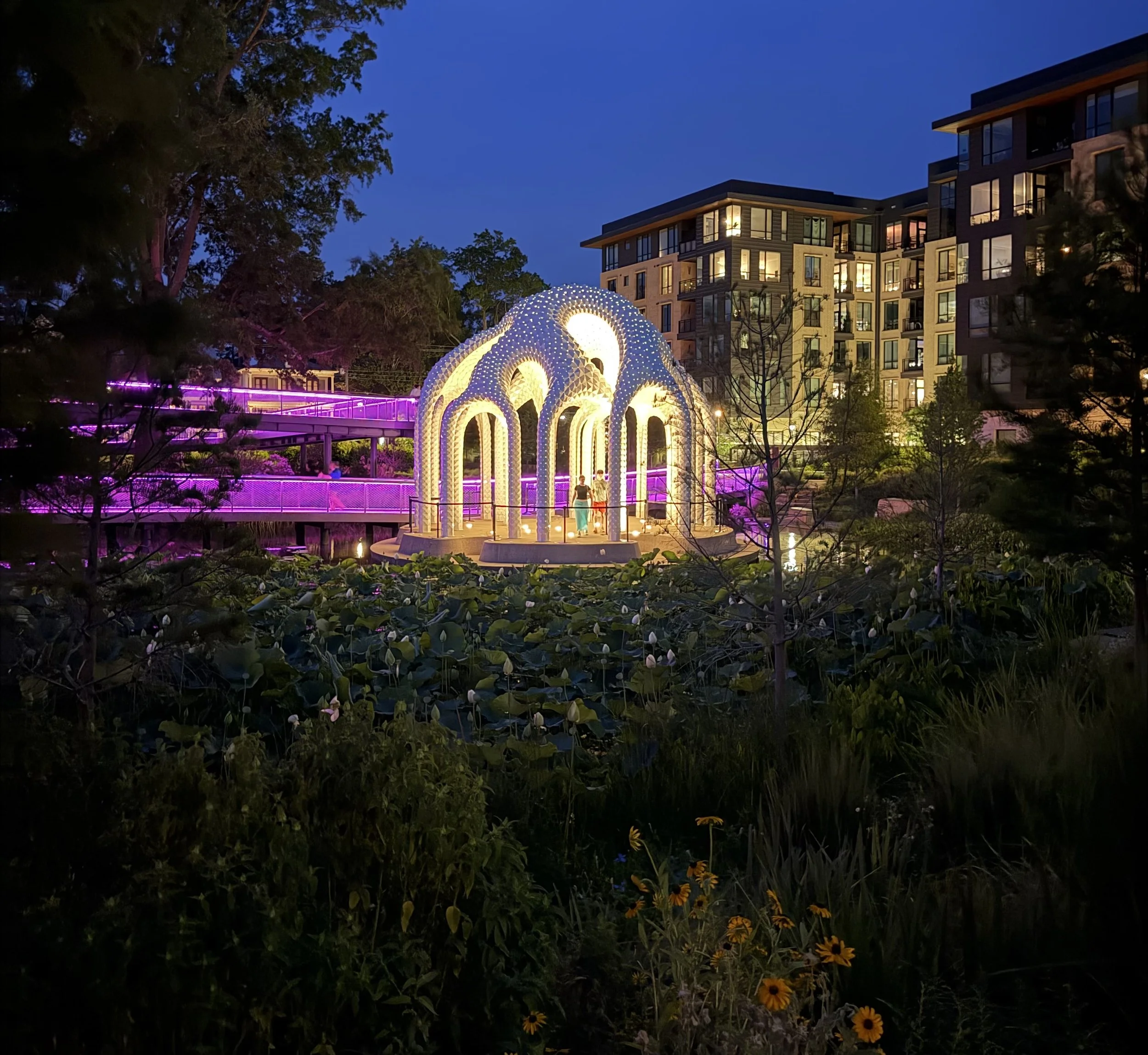
Downtown Cary comes alive at night with public art, landscaped gathering spaces, dining, and community events.
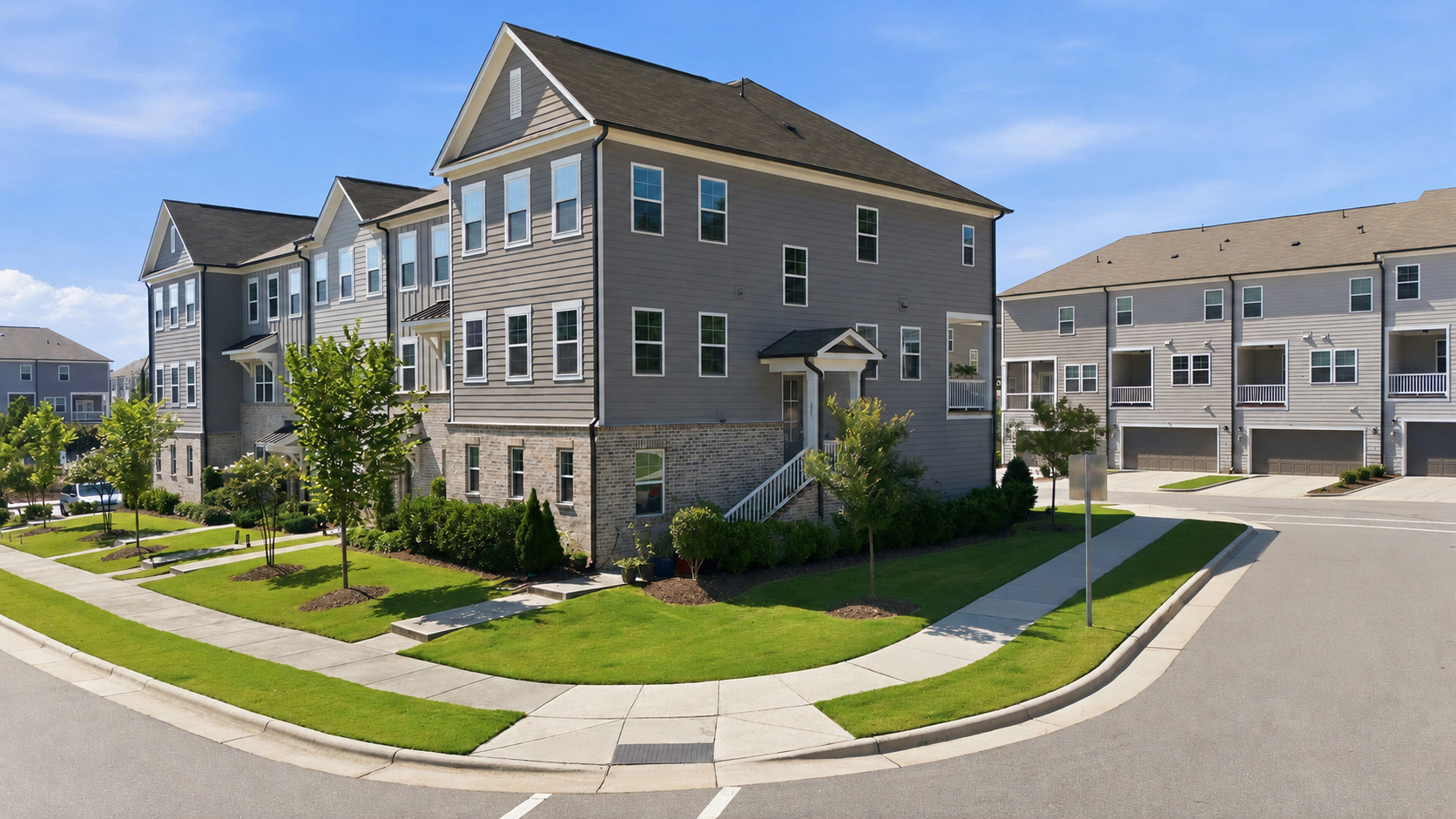
Cary offers a wide range of housing options, including newer townhome communities with modern designs and low-maintenance living.
There is no single type of Cary neighborhood.
Depending on location and budget, buyers may find:
Established neighborhoods with mature trees
Newer subdivisions
Luxury communities
Townhomes
Condominiums
Ranch homes
Traditional two-story homes
Golf-course communities
Communities with pools and amenities
Homes near greenways
Downtown properties
Larger homes in western Cary
Some older neighborhoods near downtown Cary offer mature landscaping and distinctive architecture. Newer communities in western Cary may feature larger homes, planned amenities and more recent construction.
Townhomes and condominiums can appeal to buyers who want lower exterior maintenance, while detached homes may provide more yard space and privacy.
Before choosing a neighborhood, consider:
Commute
Homeowners association fees
Yard size
Age of the home
School assignment
Proximity to shopping
Greenway access
Neighborhood amenities
Traffic patterns
Future development
A neighborhood that looks close to a destination on a map may still require a longer drive because of road layouts and traffic.
4. Cary Real Estate Is Competitive
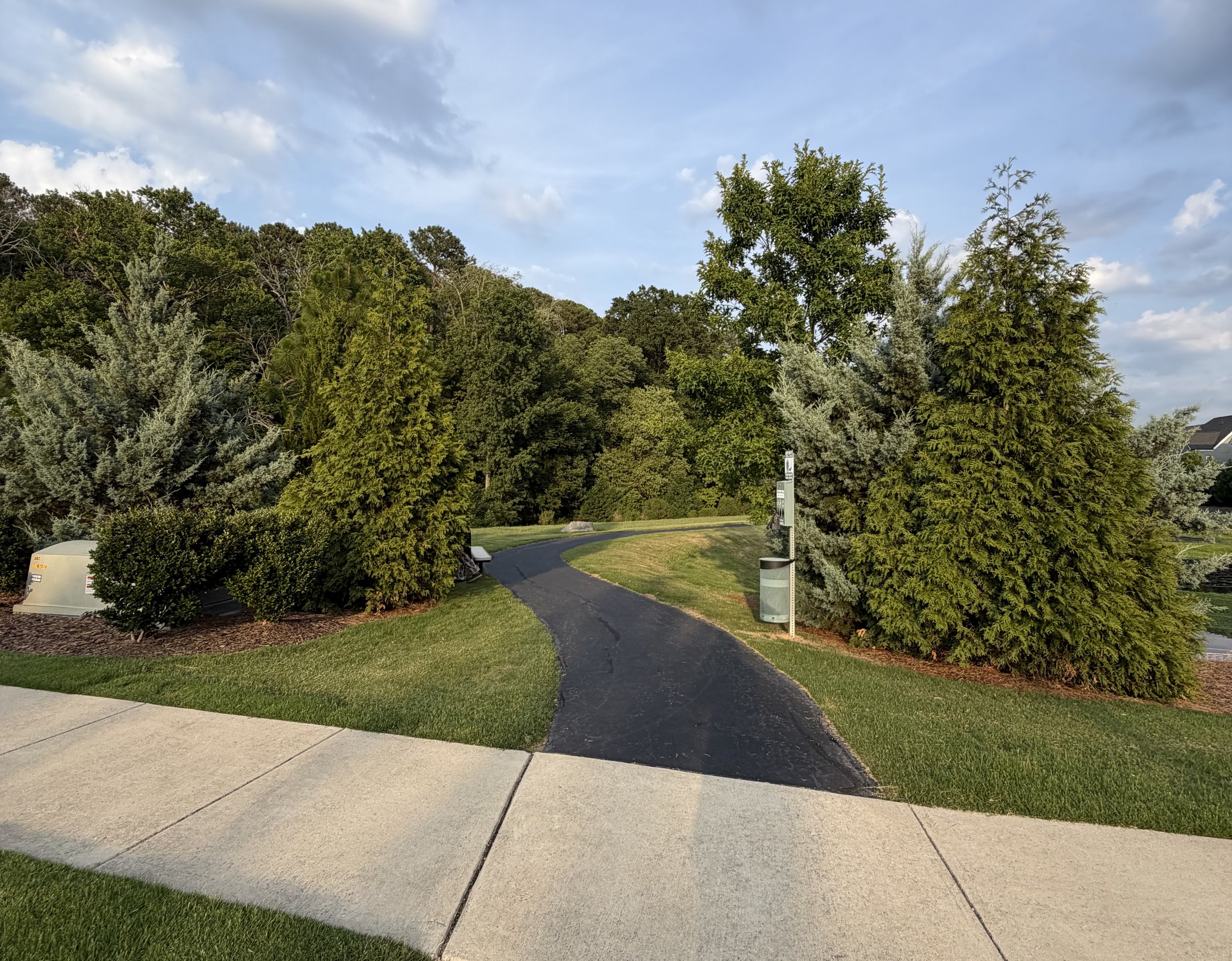
Cary’s landscaped greenways and walking paths give residents convenient places to enjoy the outdoors throughout many neighborhoods.
Cary’s popularity, central Triangle location and limited supply of certain home types can make its real estate market competitive.
Buyers may encounter competition for homes that are:
Properly priced
Updated
Located in desirable neighborhoods
Assigned to highly sought-after schools
Near greenways or parks
Convenient to major employers
Move-in ready
Located in lower-maintenance communities
Not every Cary home will receive multiple offers, and market conditions vary by price range and property type. However, desirable homes can still attract strong attention.
Buyers should prepare by:
Securing financing before touring
Understanding their comfortable monthly payment
Reviewing comparable sales
Identifying essential versus optional features
Acting promptly when the right home becomes available
Evaluating inspection and appraisal risks
Reviewing homeowners association documents
The best offer is not always simply the highest price. Financing strength, due-diligence terms, closing timing and other conditions may also influence a seller’s decision.
5. The Cost of Living Can Be Higher Than in Smaller Nearby Towns
Cary is not usually the least expensive place to purchase a home in the Triangle.
Housing prices may be higher than in more distant communities because of Cary’s location, employment access, public amenities and continued buyer demand.
Buyers should evaluate the complete cost of living, including:
Mortgage payment
Property taxes
Homeowners insurance
Homeowners association dues
Utilities
Maintenance
Commuting
Childcare
Landscaping
Recreation
Vehicle expenses
A newer townhome with an association may require less personal exterior maintenance but include monthly dues. An older detached home may have no HOA but require larger future expenditures for the roof, heating system, windows or exterior repairs.
The asking price is only one part of affordability.
6. Cary Is Convenient to Major Employment Centers
One of Cary’s strongest advantages is its access to employment throughout the Triangle.
Residents may work in:
Research Triangle Park
Raleigh
Durham
Morrisville
Cary
Chapel Hill
Wake County healthcare systems
Technology companies
Financial institutions
Universities
Government
Life-science organizations
The exact commute depends heavily on the neighborhood.
Someone working near Raleigh-Durham International Airport or Research Triangle Park may prefer northern or western Cary. A person working in downtown Raleigh may prioritize eastern Cary or access to major roads.
Remote and hybrid workers may place more importance on home-office space, internet access and nearby coffee shops than on a daily highway commute.
Test any important commute during actual weekday traffic before purchasing.
7. Traffic Depends on Where and When You Drive
Cary has extensive infrastructure, but it is also a large and growing community.
Traffic can become heavier around:
Interstate 40
US-1
NC-540
Cary Parkway
High House Road
Kildaire Farm Road
Harrison Avenue
Davis Drive
Tryon Road
Shopping and school areas
Travel times may vary significantly between early morning, school arrival, rush hour and weekends.
A home located only a few miles from work can still require substantial travel time if the route passes through several busy intersections.
Before buying, drive from the property to:
Work
School
Grocery stores
Daycare
Medical providers
Frequently visited relatives
Major highways
This provides a better understanding of daily convenience than distance alone.
8. Cary Is Known for Its Greenway System
Outdoor recreation is one of Cary’s strongest lifestyle features.
In 2026, Cary announced that its greenway system had surpassed 100 miles of trails, connecting neighborhoods, parks, schools, businesses and community destinations.
Residents use the greenways for:
Walking
Running
Cycling
Dog walking
Exercise
Commuting
Accessing parks
Spending time outdoors
The Black Creek Greenway extends approximately 7.1 miles from Lake Crabtree to Bond Park and connects with the White Oak Creek Greenway system. Portions of this network are part of the larger East Coast Greenway route.
For buyers who enjoy outdoor activity, direct or nearby greenway access can be a meaningful neighborhood feature.
However, homes directly adjacent to trails may also have additional pedestrian traffic, so buyers should evaluate their privacy preferences.
9. Downtown Cary Park Has Changed the Downtown Experience
Downtown Cary has received significant investment and has become one of the town’s most popular gathering areas.

The illuminated public art pavilion at Downtown Cary Park creates a memorable gathering place for residents and visitors.
The seven-acre Downtown Cary Park includes:
Play structures
Botanical areas
Open lawns
Public art
Event spaces
Walking paths
Park Street Courts
A dog park
A bark bar
Gathering spaces
The park opened in late 2023 and was designed for active recreation, events and everyday use.
Visitors can combine a park visit with restaurants, coffee shops, breweries, cultural events and other downtown businesses.
The park hosts ongoing programming, which may include:
Live music
Fitness activities
Children’s programs
Holiday events
Markets
Food events
Community celebrations
For buyers who previously viewed Cary as entirely suburban, the downtown area may offer a more social and walkable lifestyle than expected.
10. Cary Has More Than 30 Parks and Natural Areas
In addition to its greenway network, Cary maintains more than 30 public parks and natural areas.
Popular recreational locations include:
Fred G. Bond Metro Park
Downtown Cary Park
Hemlock Bluffs Nature Preserve
North Cary Park
Mills Park
Marla Dorrel Park
Carpenter Park
Jack Smith Park
Green Hope Elementary School Park
Thomas Brooks Park
Available amenities may include:
Walking trails
Playgrounds
Athletic fields
Picnic areas
Lakes
Nature programs
Dog parks
Community centers
Outdoor courts
Fishing
Boating access
Families, runners, cyclists and pet owners may find Cary’s park system to be one of the town’s greatest advantages.
11. Cary Offers Major Sports and Entertainment Venues
Cary hosts several prominent sports facilities and entertainment destinations.
WakeMed Soccer Park
WakeMed Soccer Park hosts professional and amateur soccer, including matches associated with North Carolina FC and the North Carolina Courage.
USA Baseball National Training Complex
The complex hosts baseball training, tournaments and national events.
Koka Booth Amphitheatre
Koka Booth Amphitheatre provides concerts, festivals and seasonal events in an outdoor setting.
Cary Tennis Park
The Cary Tennis Park offers extensive tennis facilities and hosts tournaments and community programs.
Visit Raleigh identifies these venues among Cary’s major attractions, along with its cultural and historic destinations.
Sports fans and families involved in youth athletics may especially appreciate living near these facilities.
12. Cary Hosts Popular Festivals and Events
Cary maintains an active annual event calendar.
Popular community events have included:
Lazy Daze Arts and Crafts Festival
Spring Daze Arts and Crafts Festival
Hum Sub Diwali
Heart of the Holidays
Downtown Cary Park events
Concerts at Koka Booth Amphitheatre
Cultural celebrations
Farmers markets
Seasonal programs
These events attract residents and visitors throughout the year.
Cary has also hosted a Pimento Cheese Festival featuring dozens of vendors and creative dishes centered on the Southern staple.
Event details can change, so always check the current town or venue calendar before attending.
13. Restaurants and Shopping Are Widely Available

Cary’s diverse dining scene includes local favorites like Cilantro Indian Cafe, serving flavorful Indian dishes in a modern, welcoming setting.
Cary offers a broad mix of dining and shopping.
Residents can find:
Independent restaurants
International cuisine
Coffee shops
Breweries
Bakeries
Casual dining
Fine dining
Grocery stores
Specialty markets
National retailers
Shopping centers
Major shopping areas include locations near:
Crossroads Plaza
Cary Towne Boulevard
Waverly Place
Park West Village
Fenton
Kildaire Farm Road
High House Road
Davis Drive
Fenton is one of Cary’s newer mixed-use destinations and includes restaurants, stores, entertainment and residences.
Downtown Cary also provides local dining, drinks, arts and entertainment. Visit Raleigh highlights its breweries, shops, farmers market and Cary Arts Center among the area’s attractions.
14. Cary Is Served Primarily by Wake County Public Schools
Most Cary addresses are served by the Wake County Public School System.
WCPSS is a large district serving more than 161,000 students.
The district offers:
Traditional-calendar schools
Year-round schools
Magnet programs
Career and technical education
Advanced coursework
Special programs
Athletic programs
School assignments are based on the property address and may change as enrollment and attendance boundaries are adjusted.
Buyers should verify:
Base school
Calendar
Transportation eligibility
Assignment caps
Enrollment availability
Magnet options
Future reassignment plans
Do not rely solely on the schools displayed in a real estate listing. WCPSS provides an official base-school lookup and enrollment resources for new families.
Cary also has private, charter and preschool options, although availability and admissions vary.
15. Cary Is a Diverse and International Community
Cary’s population represents more than 60 nationalities.
That diversity is reflected in:
Restaurants
Cultural celebrations
Religious organizations
Grocery stores
Community events
Schools
Professional networks
Events such as Hum Sub Diwali attract large crowds and highlight Cary’s international character.
For people moving from another state or country, Cary may feel welcoming because many residents are also transplants.
It is common to meet people who relocated for technology, healthcare, education, research or other Triangle employment opportunities.
16. Raleigh-Durham International Airport Is Nearby
Cary’s access to Raleigh-Durham International Airport is valuable for frequent travelers and people whose families live outside North Carolina.
Travel time varies by neighborhood and traffic, but many Cary residents can reach the airport without crossing the entire Triangle.
This can benefit:
Business travelers
Remote professionals
Airline employees
Families who travel frequently
Residents with out-of-state relatives
People relocating from another region
Airport access is one factor that can make northern and western Cary especially attractive to certain buyers.
17. Cary Has Advantages and Tradeoffs
No community is perfect for every buyer.
Potential Advantages of Living in Cary
Central Triangle location
Strong access to major employment centers
More than 100 miles of greenways
Extensive parks and recreation
Diverse housing options
Established neighborhoods
Restaurants and shopping
Major sports facilities
Community events
Access to RDU Airport
Revitalized downtown
Diverse population
Potential Considerations
Home prices can be higher than in smaller surrounding towns
Traffic can be heavy
Some neighborhoods have substantial HOA dues
School assignments may change
Newer homes may have smaller lots
Popular homes can attract competition
Certain areas remain car-dependent
Rapid development can change nearby surroundings
Whether Cary is a good fit depends on your priorities, budget and daily routine.
Is Cary, NC a Good Place for Families?
Cary may appeal to families because of its parks, recreation programs, greenways, community events and access to Wake County schools.
Families may also appreciate:
Youth sports
Playgrounds
Libraries
Cultural programs
Community centers
Camps
Walking trails
Family-oriented festivals
Proximity to healthcare
Parents should still independently research school assignments, childcare costs and their commute before selecting a neighborhood.
Is Cary a Good Place for Young Professionals?
Cary can work well for young professionals who want proximity to Triangle employers while preferring a suburban environment.
Potential advantages include:
Access to RTP
Access to Raleigh
Restaurants and breweries
Fitness and recreation
Townhomes and condominiums
Greenways
Downtown events
Airport proximity
Someone seeking extensive nightlife within walking distance may prefer downtown Raleigh or Durham. However, Cary provides quieter living while keeping those cities accessible.
Is Cary a Good Place to Retire?
Retirees may be attracted to Cary because of its healthcare access, ranch homes, townhomes, recreation programs, cultural events and proximity to RDU Airport.
Important considerations include:
Single-level living
Exterior maintenance
HOA responsibilities
Healthcare proximity
Property taxes
Walkability
Transportation
Distance from family
Future accessibility needs
Cary includes both older ranch neighborhoods and newer low-maintenance communities, giving retirees a range of options.
Frequently Asked Questions About Moving to Cary, NC
Is Cary part of Raleigh?
No. Cary is its own municipality, although it is part of the greater Raleigh and Triangle metropolitan area.
How large is Cary?
Cary has more than 191,000 residents and represents over 60 nationalities.
Does Cary have a downtown?
Yes. Downtown Cary includes restaurants, cultural facilities, local businesses and the seven-acre Downtown Cary Park.
Does Cary have good outdoor recreation?
Cary has more than 100 miles of greenways and more than 30 parks and natural areas.
Is Cary close to Research Triangle Park?
Yes. Certain parts of Cary offer convenient access to RTP, although travel time varies by neighborhood and traffic.
Is Cary close to Raleigh?
Yes. Cary borders Raleigh and provides access through several major and local roads.
Is Cary walkable?
Certain parts of downtown Cary are becoming more walkable. Most neighborhoods and commercial areas remain car-oriented.
Are homes expensive in Cary?
Cary housing can be more expensive than in smaller or more distant communities. Prices vary significantly by neighborhood, property type, size, condition and school assignment.
Does Cary have new construction?
Yes, particularly in western Cary and surrounding growth areas. Availability changes as land becomes more limited.
Does Cary have older homes?
Yes. Established areas near downtown Cary and eastern Cary include older homes with mature trees and larger lots.
Are there townhomes in Cary?
Yes. Cary has townhomes and condominiums at a range of ages and price points.
Does Cary have public transportation?
Cary offers GoCary bus service, although usefulness depends on the resident’s location and destination.
Which schools serve Cary?
Most Cary addresses are served by Wake County Public Schools, but assignments must be verified for the exact property.
Is Cary convenient to the airport?
Yes. Many areas of Cary offer relatively convenient access to Raleigh-Durham International Airport.
What is there to do in Cary?
Popular activities include Downtown Cary Park, greenways, Bond Park, Hemlock Bluffs, concerts at Koka Booth Amphitheatre, professional soccer, baseball events, restaurants and annual festivals.
Is Cary suitable for pets?
Many neighborhoods provide sidewalks, greenways and yards. Cary also has dog parks, including facilities at Downtown Cary Park and Godbold Park.
Looking for a Home in Cary, NC?
Cary offers an extensive variety of neighborhoods and home styles, from established ranch homes and wooded subdivisions to newer townhomes and luxury communities.
Choosing the right property requires more than comparing bedrooms and square footage. Buyers should evaluate commute patterns, school assignments, neighborhood amenities, homeowners association rules and nearby development.
For help exploring homes for sale in Cary, contact:
Blair Whelan, REALTOR®
Brokered by eXp Realty
Phone: (919) 527-5727
Email: Blair.whelan@exprealty.com
Website: blairwhelanrealty.com