Why Isn’t My House Selling in Raleigh? 10 Reasons Homes Sit on the Market

10 common reasons homes sit on the market, and what Raleigh sellers can do to improve their chances of selling.
Selling a home can be stressful, especially when you expected strong interest but the property continues sitting on the market without an acceptable offer.
At first, the lack of activity may not seem concerning. Every home takes some time to sell, and buyers may need several days or weeks to discover the listing. However, when showings begin slowing down, feedback becomes repetitive, or the listing approaches expiration, many sellers start asking the same question:
Why isn’t my house selling?
There is rarely just one reason.
A home may be slightly overpriced, photographed poorly, difficult to show, missing important information, or competing against properties that appear more move-in ready. In some cases, the listing started with a reasonable strategy, but the agent and seller did not adjust quickly enough when the market responded differently than expected.
The good news is that a home failing to sell does not necessarily mean there is something fundamentally wrong with it. It often means the pricing, presentation, accessibility, or marketing strategy needs to change.
This guide explains ten common reasons homes sit on the market in Raleigh and the surrounding Triangle area, what seller feedback may actually mean, and what homeowners should consider before relisting an expired property.
1. The Home Was Priced Too High From the Beginning
Pricing is one of the most important decisions made during the listing process.
A seller may understandably want to begin at a higher price to leave room for negotiation. However, buyers do not usually evaluate a property based on the seller’s preferred net proceeds or how much money was spent on improvements. They compare it with other homes currently available and properties that recently sold.
When a home enters the market above the range buyers consider reasonable, several things can happen:
Buyers may skip the listing entirely.
The home may receive fewer showings.
Agents may recommend stronger competing properties.
The listing may remain active while better-priced homes sell.
The property may eventually require multiple price reductions.
Buyers may assume something is wrong once the days on market increase.
The first days and weeks of a listing are often the period of greatest exposure. Buyers who have already been searching in that price range may notice the property immediately. If the initial price is too high, the seller may lose the strongest opportunity to create urgency.
A later price reduction can help, but it may not fully recreate the excitement of a new listing.
Pricing Based on Comparable Sales
A strong pricing strategy should be based on comparable properties with similar:
Location
Square footage
Age
Condition
Lot size
Floor plan
Number of bedrooms and bathrooms
Garage configuration
Updates
Neighborhood amenities
Active listings are useful because they show the current competition. However, active listings do not confirm what buyers are actually willing to pay. Recently closed sales provide stronger evidence of market value.
Pending sales can also be helpful, although the final sale price may not be available until closing.
Signs the Price May Be the Problem
Pricing may need to be reconsidered when:
The home receives very few showings.
Online views do not convert into appointments.
Buyers consistently say the home is priced above comparable properties.
Similar homes are selling while yours remains active.
Multiple price reductions have produced little improvement.
The property receives showings but no second visits or offers.
The right price does not mean giving the home away. It means positioning the property where qualified buyers recognize its value and feel motivated to act.
2. The Listing Photos Did Not Create Enough Interest
Most buyers see a home online before they see it in person.
The listing photos are often the first showing.
If the images are dark, blurry, poorly composed, incomplete, or taken with a phone, buyers may assume the property is less appealing than it really is.
A home can be clean, updated, and well maintained, but weak photography can make rooms appear:
Smaller
Darker
Cluttered
Outdated
Poorly arranged
Less valuable
The first image is especially important because it becomes the primary photo displayed in search results. If that image does not immediately attract attention, buyers may continue scrolling.
Common Photography Problems
Listing photos may fail to generate interest when they include:
Poor lighting
Closed blinds
Crooked angles
Too much ceiling or flooring
Cluttered countertops
Personal items
Visible cleaning supplies
Unmade beds
Toilet seats left open
Cars blocking the exterior
Trash cans in front of the home
No photographs of important rooms
No view of the backyard or outdoor spaces
Professional photography is not only for luxury homes. Good photography helps buyers understand the layout, condition, and features of almost any property.
Drone photography, floor plans, virtual twilight images, video tours, and carefully selected detail shots may also improve the listing when they are appropriate for the property.
More Photos Are Not Always Better
A listing does not need dozens of repetitive images. Every photograph should serve a purpose.
The goal is to give buyers a clear and appealing view of the home while encouraging them to schedule an in-person showing.
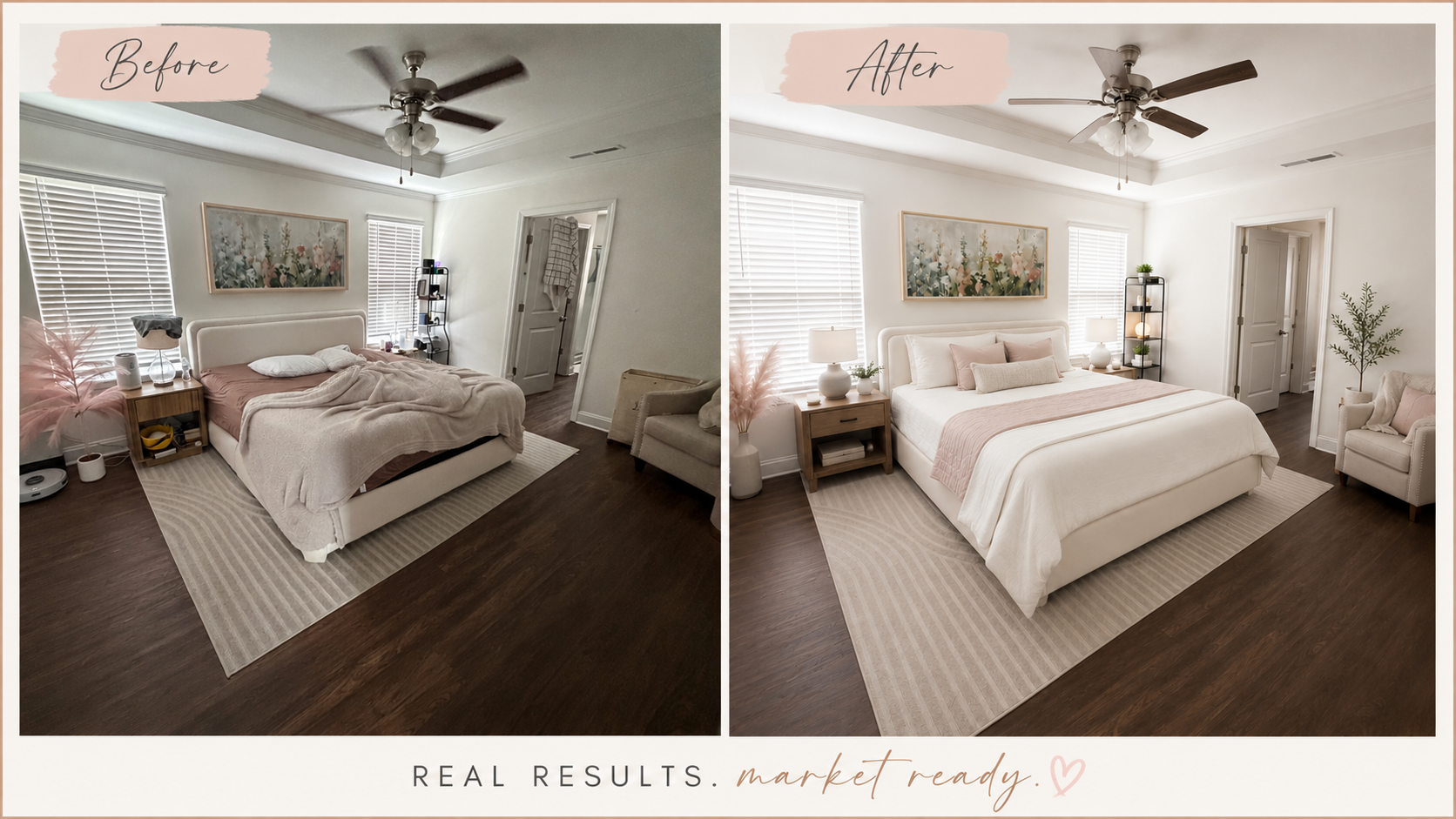
Before and after bedroom staging shows how simple preparation can help a Raleigh home look brighter, cleaner, and more appealing to buyers.
A thoughtful photo sequence should normally guide viewers through the property in a logical order:
Exterior
Entry
Main living areas
Kitchen
Dining area
Primary bedroom
Secondary bedrooms
Bathrooms
Laundry or bonus spaces
Outdoor areas
Community amenities
When the photos do not accurately or attractively represent the home, the listing may never receive the attention it deserves.
3. The Property Was Not Prepared Properly
Some homes are placed on the market before they are ready.
Sellers may feel pressure to list quickly, but rushing the preparation process can reduce buyer interest and weaken the final sale price.
Buyers form opinions quickly. Small details may not seem important individually, but together they influence how the home feels.
A property may struggle to sell when buyers notice:
Strong odors
Excessive clutter
Personal photographs throughout the home
Dirty flooring
Peeling paint
Burned-out light bulbs
Overgrown landscaping
Stained carpet
Damaged doors
Visible pet items
Crowded furniture
Deferred maintenance
Dark rooms
Full closets
Unfinished repair projects
Sellers do not always need to complete a major renovation. In many cases, cleaning, decluttering, repairing visible damage, improving lighting, and adjusting furniture placement can make a meaningful difference.
The Goal of Preparation
The goal is not to remove every sign that someone lives in the home. The goal is to help buyers imagine living there themselves.
A well-prepared property generally feels:
Clean
Bright
Neutral
Spacious
Maintained
Easy to navigate
Buyers may forgive older finishes if the home appears clean and well cared for. They are often more concerned when basic maintenance appears neglected.
Curb Appeal Matters
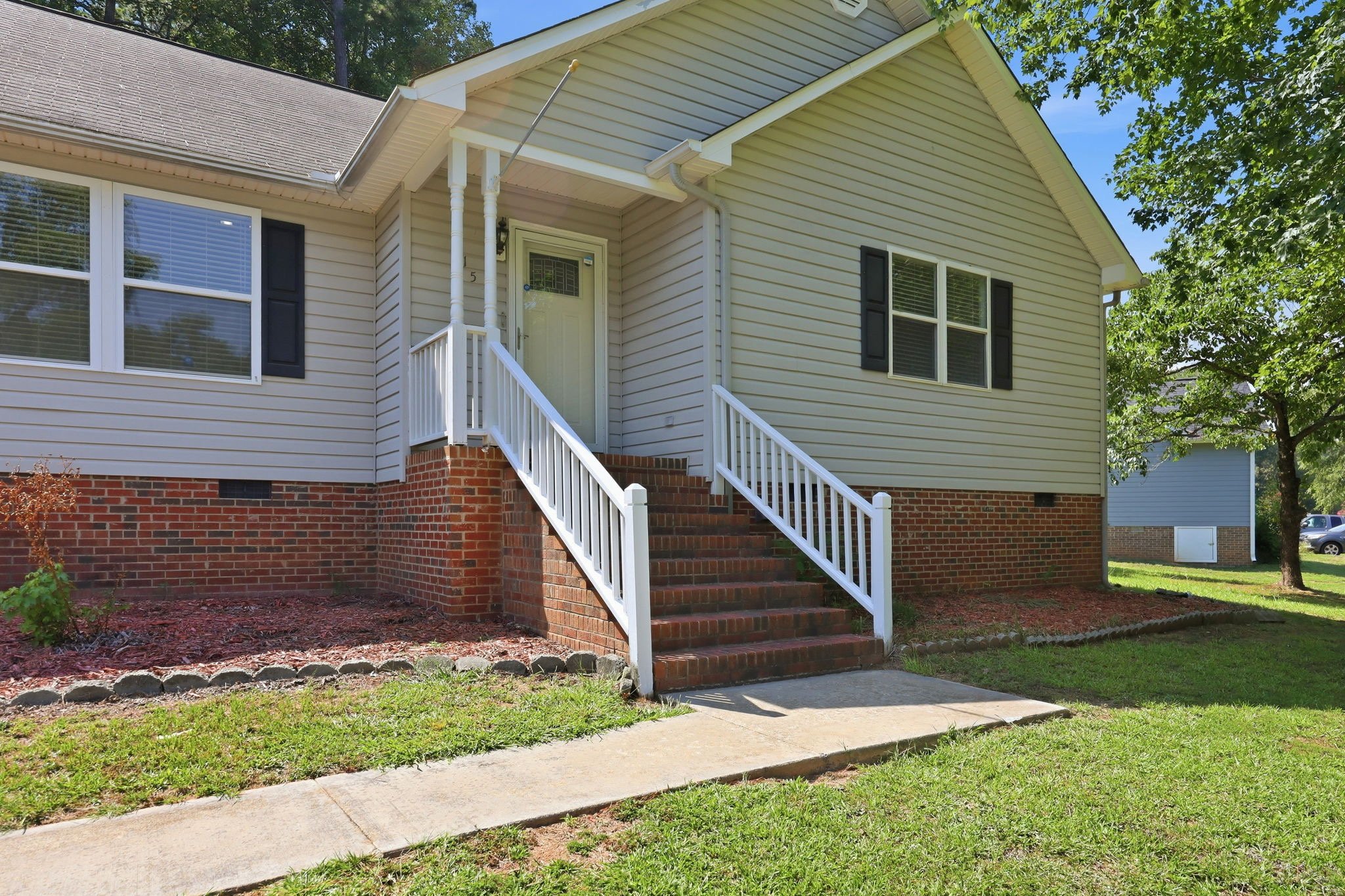
A well-maintained exterior helps create a strong first impression and gives buyers more confidence before they even step inside.
The exterior creates the first in-person impression.
Before listing, sellers should consider:
Pressure washing
Cleaning windows
Trimming landscaping
Removing weeds
Refreshing mulch
Painting the front door if needed
Replacing damaged exterior fixtures
Removing unnecessary yard decorations
Cleaning the porch
Making the entry easy to access
A buyer who feels disappointed before entering the home may view the entire property more critically.
4. Important Features Were Missing From the Listing
A property can be appealing and competitively priced but still underperform when the listing does not clearly explain what makes it valuable.
MLS information should be accurate, complete, and strategically written.
Important features are sometimes omitted, including:
Updated roof
New HVAC system
Renovated kitchen
Quartz or granite countertops
Soft-close cabinetry
Walk-in pantry
Fireplace
Double vanity
Walk-in shower
Finished bonus room
Fenced yard
Cul-de-sac location
Community pool
Garage storage
New windows
Energy-efficient improvements
Main-level bedroom
Home office
Large lot
Covered porch
Nearby greenways or parks
When those details are missing, buyers may not understand why the property deserves attention.
The Description Should Be Specific
A weak description often relies on general phrases such as:
Must see
Great location
Won’t last
Beautiful home
Lots of potential
Move-in ready
These phrases do not explain the property.
A stronger description identifies the actual features and benefits. For example, instead of saying “beautiful kitchen,” the listing could mention white shaker cabinets, quartz countertops, a center island, stainless-steel appliances, and a tiled backsplash.
Specific language gives buyers a reason to schedule a showing.
Accurate MLS Fields Matter
Buyers and agents frequently search using filters. If important fields are incomplete or incorrect, the listing may not appear in relevant searches.
Examples include:
Garage count
Bedroom count
Main-floor bedroom
Fireplace
Community amenities
Architectural style
Basement
Lot size
School information
HOA details
Water and sewer type
A complete listing increases the likelihood that qualified buyers will find the home.
5. There Was No Real Marketing Strategy
Placing a home in the MLS is important, but it is not a complete marketing plan.
A strong listing launch should be coordinated and intentional.
Depending on the property and seller’s goals, the marketing strategy may include:
Professional photography
Video
Drone photography
Floor plans
Property measurements
Custom listing website
Social media promotion
Email marketing
Agent outreach
Open houses
Directional signage
Print materials
Coming Soon promotion
Off-market or private-network exposure
Follow-up with interested buyers
Retargeting or digital advertising
A listing may sit when the marketing effort ends after the property is entered into the MLS.
Marketing Should Target the Right Buyer
Effective marketing is not simply posting the property everywhere. It is presenting the home to the buyers most likely to purchase it.
For example:
A North Raleigh townhouse may appeal to downsizing buyers, first-time buyers, investors, or professionals seeking lower-maintenance living.
A home with a main-level primary suite may appeal to buyers planning for long-term accessibility.
A large yard may appeal to buyers with pets, children, or outdoor hobbies.
A home near major roads may appeal to commuters.
A renovated property may appeal to buyers who do not want to complete repairs after closing.
The marketing should connect the property’s features to the lifestyle or needs of the likely buyer.
A Launch Should Create Momentum
The property should ideally reach the market with:
Accurate pricing
Completed photography
Finalized description
Correct MLS fields
Clear showing instructions
Clean and prepared condition
A coordinated promotion plan
Listing first and improving everything later can cost the seller valuable exposure.
6. Showings Were Too Difficult to Schedule
Even a desirable property can struggle when buyers cannot easily see it.
Common showing barriers include:
Limited showing hours
Long notice requirements
Frequent denied appointments
No weekend availability
Difficult lockbox access
Confusing instructions
Pets that must be removed
Tenants who do not cooperate
Seller approval required for every showing
Occupants who remain in the home during appointments
Sellers have legitimate privacy, work, family, and safety concerns. However, the more restrictions placed on showings, the smaller the buyer pool may become.
A buyer viewing several homes in one day may skip a property if the appointment cannot be confirmed quickly.
Create a Reasonable Showing Plan
A practical showing strategy might include:
Defined daily showing windows
Reasonable notice
Easy appointment confirmation
Clear parking and access instructions
A plan for pets
A clean and ready home
Backup access instructions
Prompt communication
The goal is not to create unlimited access. It is to make the process manageable for the seller while still giving qualified buyers a realistic opportunity to view the property.
7. Buyer Feedback Was Ignored
Feedback can be uncomfortable, but it is valuable.
One buyer’s opinion may not matter much. However, repeated feedback should be taken seriously.
If several buyers mention the same issue, it may be affecting the sale.
Common feedback includes:
The price feels high.
The home is too dark.
The carpet needs replacement.
The layout feels awkward.
The property needs too much work.
The yard lacks privacy.
The home smells like pets or smoke.
The rooms feel crowded.
The kitchen appears dated.
The seller’s furniture makes the rooms look small.
The competing homes offer more value.
Sellers do not need to agree with every comment. Buyers may also reject a home for reasons that cannot be changed, such as location, floor plan, or lot size.
The important question is whether the feedback reveals a correctable pattern.
Responding to Feedback
Possible responses include:
Adjusting the price
Replacing damaged carpet
Repainting a dark room
Reducing furniture
Improving lighting
Repairing visible defects
Updating photography
Changing the marketing message
Offering a closing-cost concession
Improving showing availability
A listing strategy should not remain unchanged when the market has clearly responded negatively.
8. The Home Needed Repairs or Updates
Buyers often expect to make some changes after purchasing a home. However, visible repairs can make the property feel riskier or more expensive than expected.
Common concerns include:
Roof age
HVAC age
Water stains
Foundation cracks
Wood rot
Plumbing leaks
Damaged siding
Fogged windows
Old electrical panels
Crawl-space moisture
Termite activity
Broken appliances
Peeling paint
Loose railings
Damaged flooring
Buyers may not know the actual cost of a repair, so they sometimes assume the worst.
A repair estimated at a few thousand dollars may create a much larger perceived discount in the buyer’s mind.
Repair Before Listing or Price Accordingly
Sellers generally have several options:
Complete the repair before listing.
Obtain estimates and disclose the issue appropriately.
Price the property to reflect the condition.
Offer a credit or concession when permitted.
Sell the property in its current condition.
The best approach depends on the type of repair, financing limitations, timing, cost, and seller goals.
What usually does not work is ignoring an obvious problem while pricing the home as though it does not exist.
Cosmetic Updates Can Also Matter
A home does not need to look brand new, but dated finishes can affect how buyers compare it with competing properties.
Possible improvements may include:
Neutral paint
Updated light fixtures
New cabinet hardware
Fresh landscaping
Refinished flooring
New carpet
Updated mirrors
New faucets
Modern door hardware
Before spending money, sellers should evaluate which updates are likely to improve marketability and which may not provide a worthwhile return.
9. The Seller Was Unwilling to Negotiate
The highest offer is not always the offer with the highest price.
Sellers should consider the entire proposal, including:
Purchase price
Financing
Due diligence fee
Earnest money deposit
Closing date
Requested concessions
Repair expectations
Appraisal risk
Sale contingency
Personal-property requests
Possession terms
A seller may lose a qualified buyer by refusing to negotiate small terms or by reacting emotionally to an initial offer.
An offer below list price is not necessarily an insult. It is an opening position.
Know the Seller’s Priorities
Before receiving offers, sellers should understand:
The lowest acceptable net proceeds
Preferred closing timeline
Willingness to make repairs
Ability to offer concessions
Whether a quick closing is important
Whether the seller needs time after closing
How much appraisal risk is acceptable
Clear priorities make negotiations more productive.
A skilled agent should explain the strengths and risks of each offer rather than focusing only on the price.
10. The Listing Strategy Was Not Adjusted
Markets change, competition changes, and buyer behavior changes.
A listing strategy that seemed reasonable at the beginning may need to be revised.
A home may fail to sell when the agent and seller do not review:
Showing volume
Online activity
Buyer feedback
New competing listings
Pending sales
Recent closings
Price reductions
Interest-rate changes
Neighborhood inventory
Seasonal demand
A listing should not be placed on the market and forgotten.
Questions Sellers Should Be Asking
During the listing period, sellers should receive clear answers to questions such as:
How many showings have we received?
How does that compare with similar homes?
What feedback are buyers giving?
Have competing homes gone under contract?
Have new listings entered the market?
Is our price still supported?
Is the marketing producing traffic?
Should we change the photos or description?
Is there anything about the home discouraging offers?
What is the next recommended adjustment?
A proactive strategy makes changes before the listing becomes stale.
Why Am I Getting Showings but No Offers?
Showings without offers usually mean the marketing is generating enough interest to bring buyers inside, but the property is not meeting expectations once they arrive.
Possible reasons include:
The price is too high for the condition.
The photos make the home look better than it appears in person.
The home has an odor.
The layout is less functional than buyers expected.
Competing homes offer better updates.
Repairs are visible.
The yard or location is less appealing in person.
The home feels dark or cluttered.
Buyers are concerned about the HOA.
The property is priced too close to superior options.
When a home receives many showings but no offers, the seller should not assume more marketing alone will solve the problem.
The strategy may need to address price, condition, presentation, or buyer objections.
Why Am I Getting Online Views but No Showings?
Online views without appointments may indicate that buyers notice the listing but do not see enough value to schedule a visit.
Possible explanations include:
The price is too high.
The first photo is weak.
The home lacks important features.
The description does not create interest.
The location is not clear.
The property appears dated.
The HOA fee is discouraging buyers.
The listing lacks enough photos.
The home competes poorly against nearby options.
The listing has been active too long.
The seller and agent should compare the property with listings buyers are choosing to view instead.
What Happens When a Listing Expires?
A listing expires when the listing agreement reaches its end date without the property selling and without an extension.
An expired listing does not mean the homeowner can never sell. It means the previous strategy did not produce a successful closing within the agreed period.
Before relisting, the seller should evaluate:
Why the home did not sell
Whether the price was realistic
What feedback was received
Whether the property needs repairs
Whether the photography should be replaced
Whether the description was complete
Whether showings were easy to schedule
Whether the home was marketed actively
Whether the agent communicated consistently
What will be different next time
Relisting without changing anything may produce the same result.
Should You Relist With the Same Agent?
There is no automatic answer.
The same agent may still be the right choice if they communicated well, provided clear data, marketed the property professionally, and recommended reasonable adjustments that were not implemented.
A different agent may be appropriate when:
Communication was poor.
Feedback was not shared.
The marketing was minimal.
The photography was weak.
MLS information was incomplete.
The price was not supported by data.
Showings were not followed up on.
The agent did not recommend adjustments.
The seller no longer trusts the strategy.
There is no clear plan for relaunching.
The seller should interview the next agent carefully and ask for a specific relisting strategy rather than a general promise to “market the home better.”
Questions to Ask Before Hiring a New Listing Agent
Before relisting, ask:
Why do you believe the home did not sell?
What price range is supported by recent sales?
Which properties are the strongest competition?
What changes should be made before relisting?
Will you use professional photography?
How will you market the property beyond the MLS?
How will you follow up after showings?
How often will you communicate with me?
What happens if we are not receiving activity?
When would you recommend a price adjustment?
How will you position the property differently?
What information was missing from the previous listing?
Do you have experience with expired listings?
How will you evaluate online activity?
What is the plan for the first two weeks?
The agent should be able to explain the strategy clearly and support recommendations with market data.
How to Prepare an Expired Listing for a Successful Relaunch
A relaunch should feel like a new strategy, not simply the same listing with a different agent’s name.
Before returning to the market, consider the following steps.
Review the Price
Complete a new comparative market analysis using the most recent:
Closed sales
Pending sales
Active listings
Withdrawn listings
Expired listings
The market may have changed during the previous listing period.
Complete Necessary Repairs
Address visible defects that repeatedly appeared in buyer feedback or inspection concerns.
Improve Presentation
Declutter, deep clean, adjust furniture, improve lighting, and refresh landscaping.
Replace the Photography
New photos can help separate the relaunch from the previous listing and create a stronger first impression.
Rewrite the Description
Highlight the home’s most valuable features and correct any missing or inaccurate information.
Confirm MLS Accuracy
Review every field, including:
Square footage
Bedrooms
Bathrooms
Garage
HOA information
Schools
Utilities
Amenities
Updates
Lot details
Create a Launch Plan
Coordinate the photography, marketing, showing access, communication, and listing date before the property becomes active.
Establish an Adjustment Plan
Decide in advance how the strategy will be reviewed if the property does not receive the expected activity.
How I Approach a Home That Did Not Sell
When I evaluate an expired listing, I do not assume the only problem was the price.
I review the full listing history, including:
Original list price
Price reductions
Days on market
Photography
Listing description
MLS fields
Showing activity
Buyer feedback
Competing properties
Recently sold homes
Property condition
Marketing exposure
Showing restrictions
The goal is to identify where the previous strategy lost buyer interest and create a more effective plan.
Depending on the property, that may include:

A complete marketing launch combines professional photography, drone imagery, floor plans, online exposure, and agent outreach to help a Raleigh listing stand out.
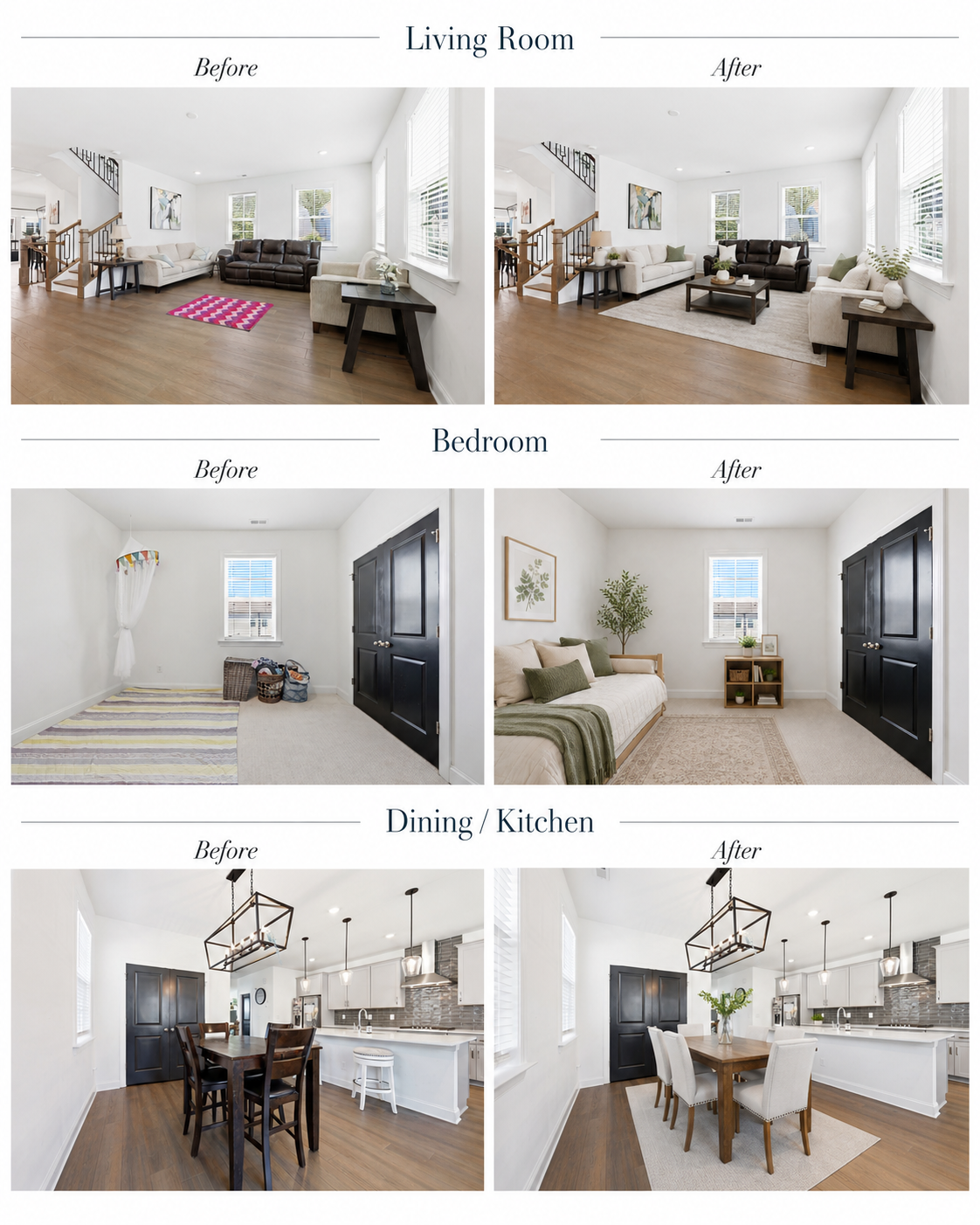
Before-and-after staging examples show how thoughtful furniture placement and styling can make living spaces feel brighter, larger, and more appealing to buyers.
Professional photography
Updated property measurements
Floor plans
Drone photography
Virtual staging
Video marketing
Social media advertising
Custom property marketing
Agent outreach
Open-house promotion
Improved listing copy
Better feature placement
Strategic pricing
Consistent seller updates
Prompt follow-up with interested buyers
Every property is different. The relisting strategy should be based on the home, neighborhood, competition, and seller’s goals.
Frequently Asked Questions
How long should I wait before lowering the price?
There is no universal number of days. The decision should be based on showing activity, buyer feedback, competition, and recent sales. If similar homes are receiving offers while yours receives little activity, it may be time to adjust sooner rather than later.
Does a price reduction make my home look desperate?
Not necessarily. A thoughtful price adjustment can reposition the home in front of a new group of buyers. Repeated small reductions without a clear strategy may be less effective than one meaningful adjustment.
Can I relist immediately after my listing expires?
A seller may be able to relist after the previous agreement ends, subject to the terms of the listing agreement and any applicable obligations. Review the agreement and confirm that the prior relationship has ended properly.
Should I take my home off the market before relisting?
Sometimes a short pause is useful for repairs, cleaning, photography, and preparation. However, simply waiting does not solve the underlying issue. The strategy should change before the home returns to the market.
Will new photos help?
They can. New professional photography may improve online interest, especially if the previous images were dark, incomplete, outdated, or poorly composed.
Is the agent always responsible when a home does not sell?
No. The outcome may be affected by price, condition, access, market conditions, seller decisions, financing, location, or competition. However, the agent should provide honest advice, clear communication, professional marketing, and timely strategy adjustments.
Should I make repairs before relisting?
It depends on the repairs, cost, buyer expectations, and seller’s financial position. Visible defects that repeatedly discourage buyers should be evaluated carefully.
Can I sell my home as-is?
A seller may choose to market a property in its current condition, but pricing and disclosure obligations still matter. Buyers may also request inspections and negotiate based on the results.
What if I cannot afford renovations?
Major renovations may not be necessary. Cleaning, decluttering, paint, lighting, landscaping, and minor repairs can sometimes improve presentation without a large budget.
How do I know whether the new price is right?
The price should be supported by recent comparable sales and current competition. It should also account for the home’s condition, location, features, and market response.
Final Thoughts
When a home does not sell, the answer is rarely to repeat the same strategy and hope for a different result.
The listing should be evaluated objectively.
In many cases, the issue comes down to one or more of the following:
Pricing
Photography
Preparation
Missing information
Limited marketing
Showing restrictions
Ignored feedback
Repairs
Negotiation
Lack of strategy adjustments
A failed listing can be frustrating, but it can also provide useful information.
The showing history, feedback, competition, and online activity can reveal exactly where the previous approach lost momentum.
Before relisting, take the time to identify the problem, prepare the property properly, and create a clear launch plan.
A home that did not sell the first time may still sell successfully when the pricing, presentation, and marketing are aligned with the market.
Is Your Raleigh-Area Home Still Unsold?
If your listing expired, was withdrawn, or has been sitting on the market without an acceptable offer, I can review the previous strategy and help you understand what may need to change.
I work with homeowners throughout Raleigh, Cary, Apex, Wake Forest, Sanford, and the surrounding Triangle communities.
My approach includes reviewing the pricing history, comparable sales, listing photos, marketing, MLS information, buyer feedback, and current competition before recommending a relaunch strategy.
Blair Whelan
REALTOR® | eXp Realty
Phone: (919) 527-5727
Email: Blair.whelan@exprealty.com
Website: blairwhelanrealty.com